
Quick answer: Triple-negative breast cancer (TNBC) is a form of breast cancer whose cells lack the three receptors most commonly targeted by breast-cancer therapies: estrogen receptor (ER), progesterone receptor (PR), and HER2. Because those targets are absent, several standard treatments do not work against it, which makes TNBC more aggressive and harder to treat. It is a major focus of new drug research aimed at finding fresh molecular targets.
What “triple-negative” means
Many breast cancers grow in response to hormones (through the ER and PR receptors) or overexpress the HER2 protein, and effective therapies exist that target each of these. TNBC cells test negative for all three. That is good news in the sense that it defines the disease precisely, but it removes the receptor-targeted and hormone-based treatment options that help many other breast-cancer patients.
Why TNBC is so challenging
TNBC tends to be more aggressive, is more likely to affect younger patients, and historically has had fewer targeted-treatment options and lower survival rates than receptor-positive breast cancers. Because it lacks the common targets, treatment has often relied more heavily on chemotherapy. This gap is precisely why researchers are working to identify new vulnerabilities in TNBC cells.
Where research is headed
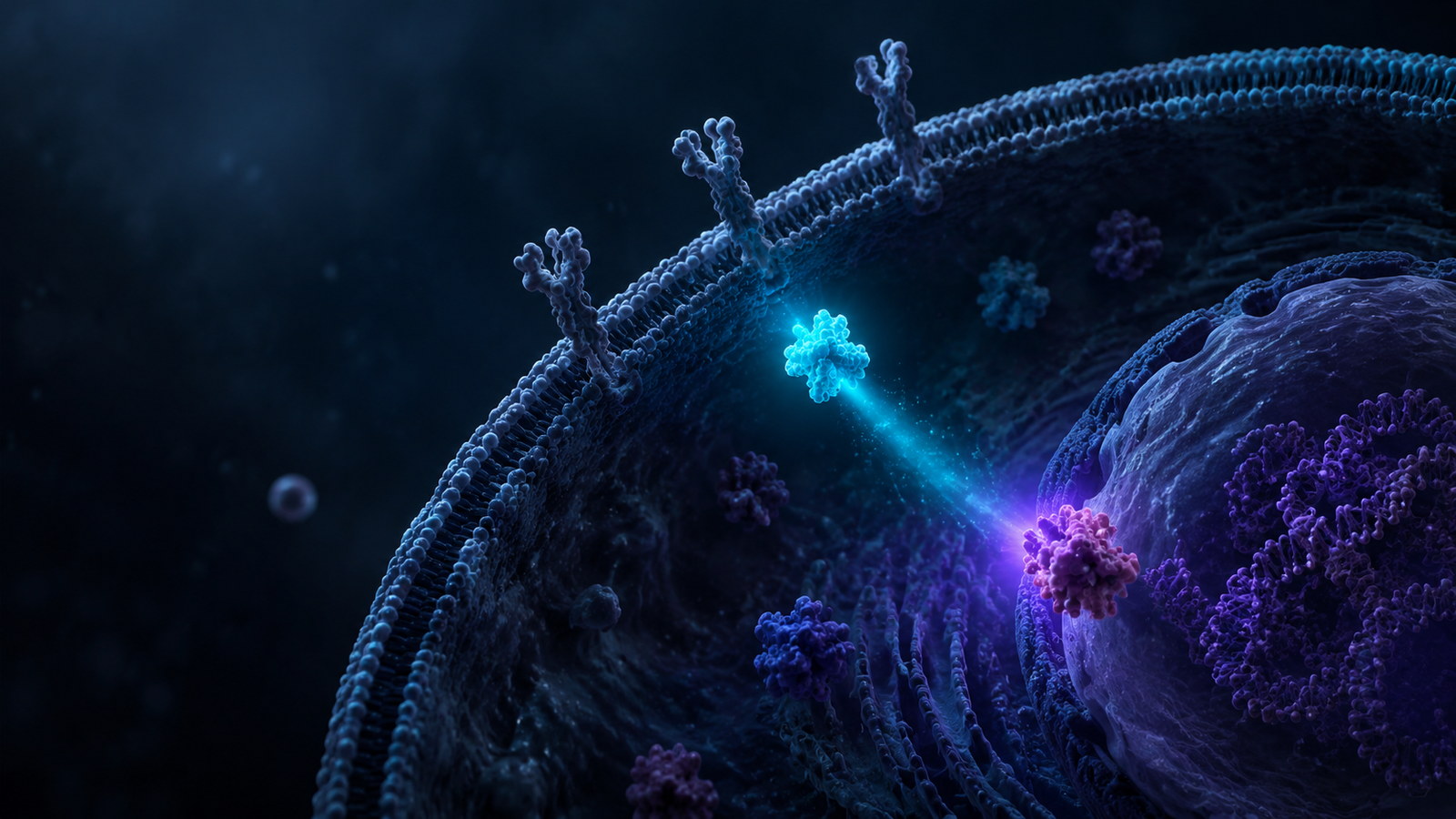
Scientists are pursuing multiple avenues in TNBC, including immunotherapy approaches, antibody-drug conjugates, and strategies aimed at genetic drivers of the disease. One area of interest involves the p53 pathway, since TP53 mutations are common in TNBC. New modalities — including small, precise molecules such as nanobodies that may reach intracellular targets — are being explored as ways to address vulnerabilities that have been difficult to drug. Visit Our Science to see how these approaches are being studied in preclinical models.
PHP Biotech’s focus on aggressive cancers
PHP Biotech is a platform biotechnology company focused on the most aggressive cancers, with TNBC as a lead area of interest for its research candidate PHP53-nb. Its proprietary nanobody platform is built as a precision oncology platform — centered on tumor-selective delivery aimed at biologically defined tumor subpopulations — and is designed to produce tumor-selective biologics that reach intracellular targets long considered undruggable. PHP53-nb, the platform’s first proof-of-concept, is being studied in preclinical models; the platform itself is intended to generate additional precision therapeutics over time. See the Potential Impact page for more on why this matters for hard-to-treat cancers like TNBC. According to the World Health Organization, breast cancer accounts for hundreds of thousands of deaths worldwide each year, underscoring why continued research into hard-to-treat subtypes like TNBC matters. All PHP Biotech findings to date are from preclinical model systems.
Frequently asked questions
The cancer cells lack estrogen, progesterone, and HER2 receptors — the three most common treatment targets.
Without those receptors, hormone and HER2-targeted therapies do not work, leaving fewer targeted options.
It can affect anyone with breast tissue but is more common in younger patients and certain populations.
Research is active across immunotherapy, antibody-drug conjugates, and novel targeted approaches — including intracellular nanobody strategies — though outcomes depend on each program’s studies.
This article is educational and is not medical advice. Patients should consult their oncology team about diagnosis and treatment.
About PHP Biotech
PHP Biotech is a U.S.-based platform biotechnology company developing a proprietary nanobody platform for precision oncology. Its linker-free, humanized nanobody platform integrates the therapeutic sequence directly into the nanobody through recombinant expression — an approach to recombinant nanobody therapeutics engineered to reach historically undruggable intracellular targets and to create a new class of biologics. The same programmable platform is designed to generate future multispecific and other next-generation biologics, produced in CHO cells to support industrial-scale recombinant manufacturing. PHP53-nb — a humanized nanobody in preclinical development, studied for p53 reactivation — is the first proof-of-concept generated by the platform, not the company’s only program. Meet the team behind this research on the About Us page. PHP Biotech’s intellectual property portfolio currently includes four U.S. patent applications covering the platform, the recombinant production technology, the therapeutic peptide library, and PHP53-nb.
Learn more at phpbiotech.com. This content is educational, describes research in model systems, and makes no efficacy, safety, or treatment claims about PHP53-nb.