

Potential Impact
Transforming Outcomes for Patients with Aggressive Solid Tumors
Patients with aggressive solid tumors face suffering and poor outcomes due to high unmet needs in their treatments. At PHP Biotech, we are committed to changing this reality. Our lead therapeutic candidate, PHP53-nb, is designed to address those critical unmet needs and has demonstrated strong preclinical promise in Triple Negative Breast Cancer (TNBC), one of the most aggressive and treatment-resistant types of breast cancer. Beyond TNBC, our molecule also shows potential in other hard-to-treat malignancies, including pancreatic cancer.
Unmet Need–Bringing New Hope to Patients with Few Treatment Options
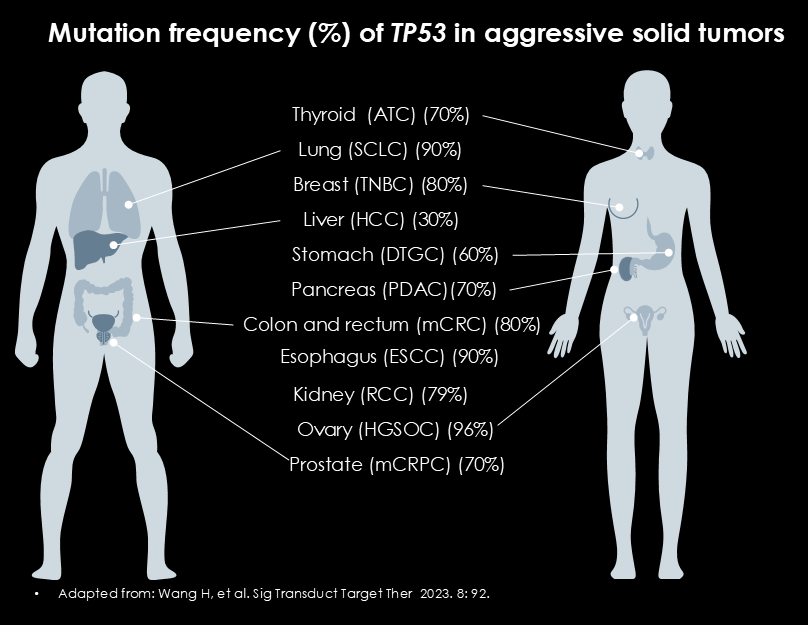
TP53 genetic mutations occur at high frequency in aggressive tumors in multiple organs. Therapeutics targeting TP53 mutations have the potential to treat many types of cancers.
TP53 Mutations occur in tumors in multiple organs
- ~50% of all human cancers contain a TP53 mutation
- ~70% of aggressive tumors contain a TP53 mutation
- Therapeutics targeting TP53 mutations have the potential to treat many types of cancers.
PHP53-nb Targets TP53 Mutations and Has the Potential to Be Combined with Other Therapeutics for an Even Greater Response
The mechanism of action of PHP53-nb makes it potentially synergistic with other cancer treatments like checkpoint inhibitors. As a protein of high modularity, it can be combined with other molecules to create multi-specific antibodies, antibody-drug conjugates (ADCs) and radioligands. The nanobody platform may also be used to create novel therapeutics or improve existing ones.
PHP53-nb has a Similar Mechanism of Action to Existing Mutant p53 Reactivators
Over the years there have been many attempts to target p53, including gene therapy, mutant p53 degradation, mutant replacement, and p53 reactivation. PHP53-nb restores p53’s functional pathways, a therapeutic strategy that has shown promising results. Identification of the impact of PHP53-nb on different TP53 mutations is ongoing.
Frequently Asked Questions
Why is the p53 mutation important in solid tumors?
Approximately 50% of solid tumors carry mutations in the TP53 gene, with 70% of aggressive tumors containing these mutations. The p53 protein is the guardian of the genome. Loss of wild-type p53 is one way cancer cells find to prevent from undergoing apoptosis (programmed cell death).
Can PHP53-nb be part of more complex molecules?
Yes. Nanobodies can serve as building blocks for more complex therapeutics, including ADCs, multi-specific antibodies and radioligands. PHP53-nb has advantages over traditional antibodies. The nanobody is significantly smaller than a traditional monoclonal antibody (about 1/10th the size), which enables better tumor penetration.
Why is PHP53-nb innovative in oncology?
PHP53-nb combines the selective antitumor action of 3-NAntC peptide with the structural and functional advantages of nanobodies, offering a manufacturable, scalable, and promising approach for treating solid tumors.