

The Science Behind Our
Innovative Approach
What We’re Focused On
A New Treatment Targeting Mutant p53
Mutations in p53 drive aggressive cancers such as TNBC and pancreatic cancer yet remain difficult to target. PHP Biotech developed a p53 functional restoration peptide 3-NAntC, which induces apoptosis and shows selective activity in cancer cells with low toxicity in normal cells.
To enable effective delivery, PHP Biotech engineered a novel nanobody platform that engrafts 3-NAntC and other potential peptides, transforming them into improved highly stable assets that can reach tumor cells, through internalization, unlocking new targeted therapeutic approaches.
Explore Our Research & Data
Published Research
3-NAntC: A Potent Crotoxin B-Derived Peptide against the Triple-Negative MDA-MB-231 Breast Cancer Cell Line
Molecules, Vol. 29, p. 1646 (2024)
The following sections summarize PHP Biotech’s key preclinical data across five core research areas:
- Efficacy – Tumor model data for TNBC and pancreatic cancer cell lines
- Mechanism – Step-by-step mechanism of action of PHP53-nb
- Toxicity – Zebrafish model safety and efficacy data
- Characterization – Physical and chemical properties of PHP53-nb
- Biodistribution – Plasma stability and organ distribution in mice
Data Demonstrates Efficacy in
Tumor Models
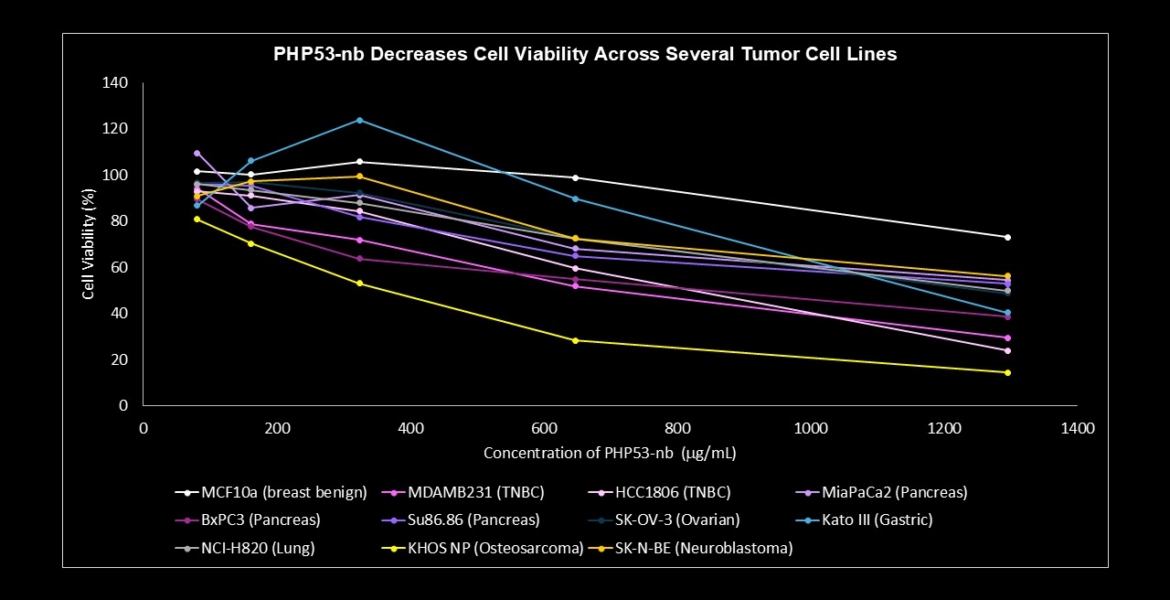
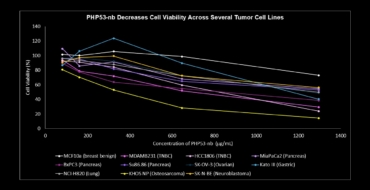
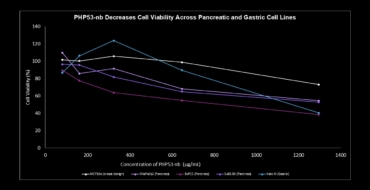
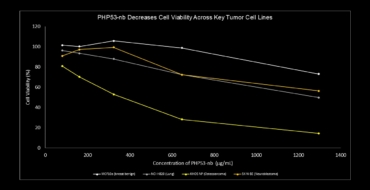
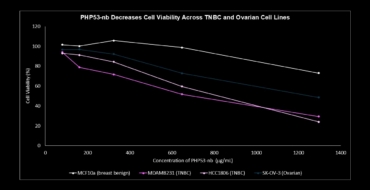
Triple negative breast cancer cells (TNBC) (pink shades) and pancreatic cancer cell lines (purple shades) and other cancers — as indicated — with different TP53 mutations were treated with PHP53-nb for 72 hours.
Cell viability was measured by the CellTiter-Glo Assay. All cell lines demonstrated significantly lower cell viability compared to the control benign breast cell line in vitro, confirming the selective antitumor activity of PHP53-nb. Click on the images at the bottom to better view data subsets.


Mechanism of Action
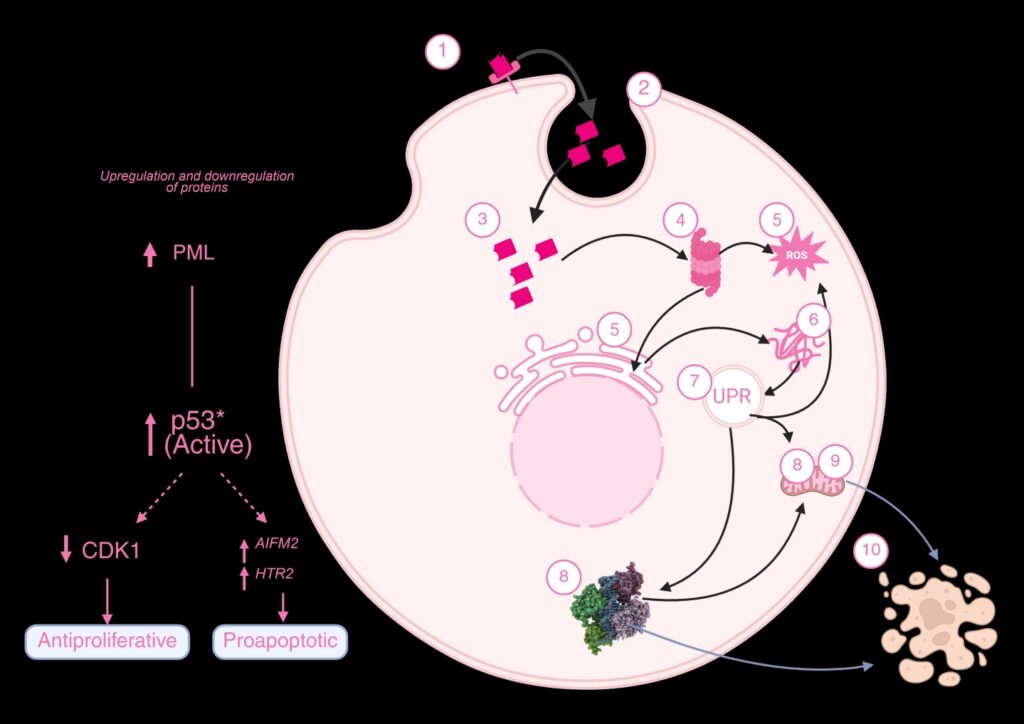
PHP53-nb induces apoptosis through the reactivation of p53 and oxidative stress.
Created in https://www.biorender.com/
PHP53-nb activates apoptosis through restoring p53’s functional pathways and mitochondrial collapse
- Selectively binds to receptor on tumor cells
- Enters cells, endocytosis through clathrin-coated vesicles
- Leaks into cytoplasm
- Proteosome modulation
- Reactive oxygen species (ROS) increase and endoplasmic reticulum (ER) stress
- Accumulation of misfolded proteins
- Triggers the unfolded protein response (UPR)
- Activation of p53 and more ROS
- Mitochondrial permeabilization
- Apoptosis

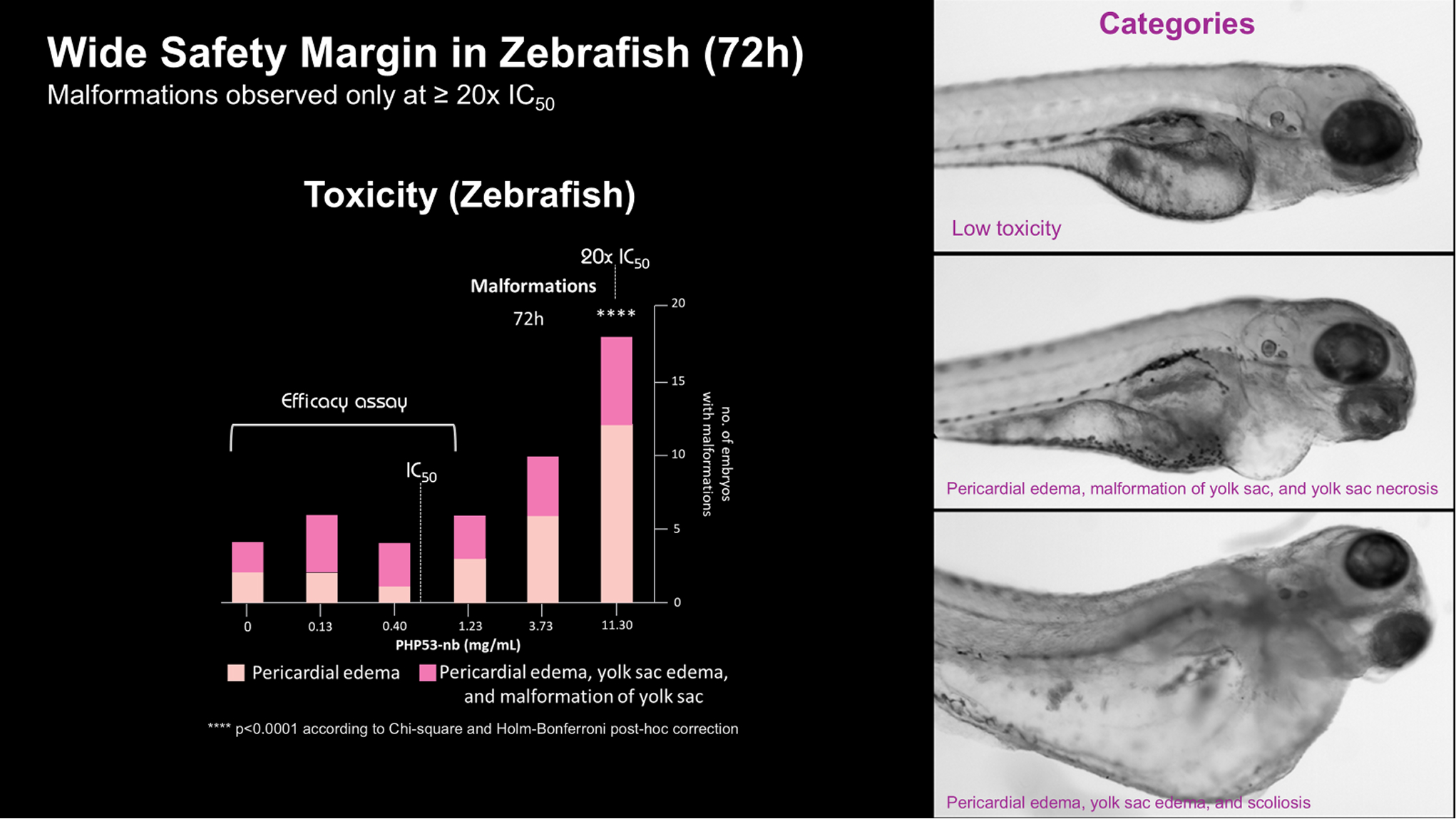
Toxicity and Efficacy in a ZebraFish Model
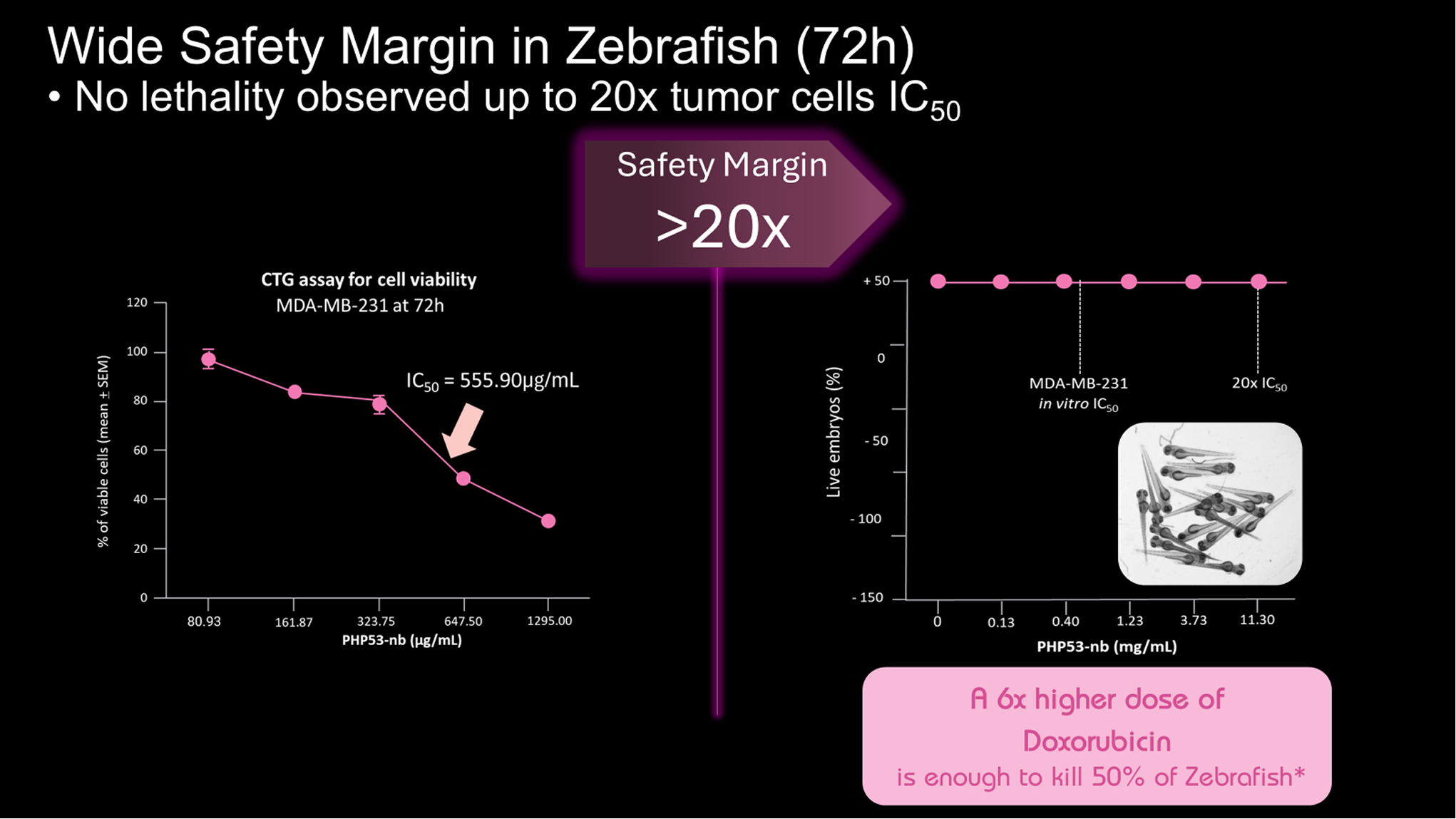
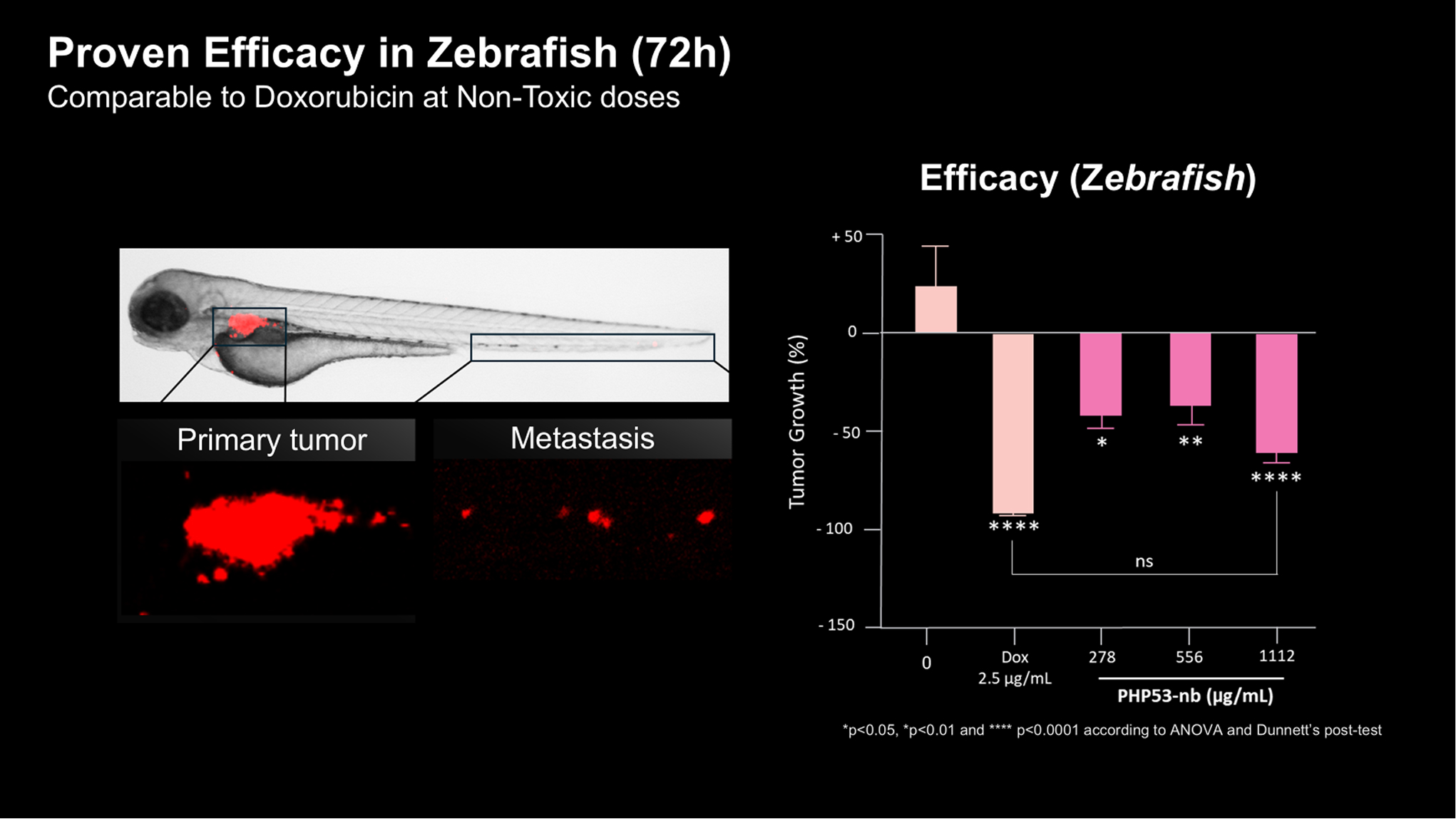
PHP53-nb significantly reduces tumor growth at non-toxic doses in a zebrafish tumor model. PHP53-nb has a wide safety margin. Malformations were only observed at very high doses, 20 times the IC₅₀. This is significantly higher than the safety margin of doxorubicin.
Physical and Chemical Characterization
PHP53-nb migrates at the expected molecular weight with good purity
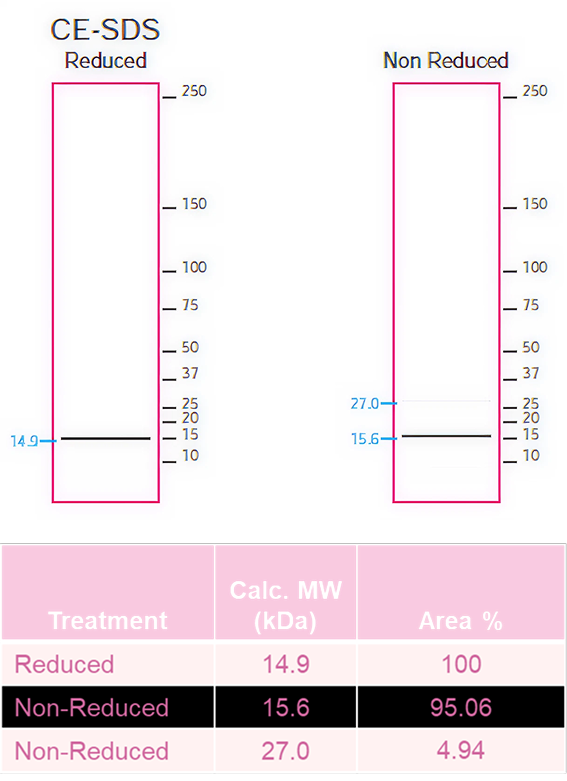
PHP53-nb migrates at the expected molecular weight of ~17 kB on both reduced and non-reduced agarose gels (Left figure).
On the non-reduced gel, a dimer of ~27.7 kDa is visible, which is cleared in the end of the purification process, resulting in a high concentration of monomers.

Biodistribution in Mice
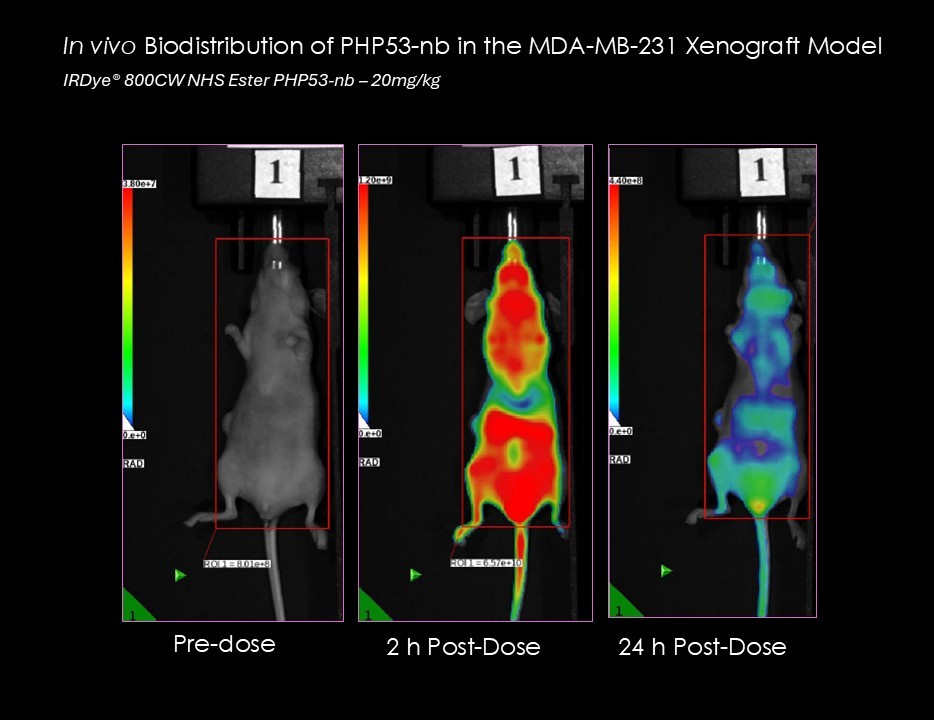
PHP53-nb demonstrates efficient systemic distribution and tissue perfusion
- Successfully reaches the target tissue (triple-negative breast cancer xenograft)
- Shows persistent tumor localization up to 24 h post-administration
- Overcomes a key nanobody limitation: rapid clearance and low target retention
- Validates platform ability to generate biopharmaceuticals while preserving pharmacological function
In vivo Biodistribution of PHP53-nb
Have Questions? Interested
in Discussing the Science?
Contact our team to learn more about the science and data we’ve found,
and how this supports our next steps.
Frequently Asked Questions
What is PHP53-nb?
PHP53-nb is an antitumor molecule developed by PHP Biotech using its GEN01-AD platform. It is a humanized camelid monoclonal nanobody that expresses, in its paratopic region, the 3-NAntC peptide. It was designed to act selectively against solid tumor cells.
What is the 3-NAntC peptide?
3-NAntC is a peptide created by PHP’s researchers that has shown significant antitumor activity in malignant triple-negative breast cancer cells (TNBC), while largely preserving the integrity of normal breast cells and fibroblasts. In vivo tests demonstrated a low toxicity profile.
What is the mechanism of action of PHP53-nb?
PHP53-nb restores the functional axis of the p53 protein, known as the “guardian of the human genome”. p53 plays a key role in cell division, cell metabolism, DNA repair, and induction of programmed cell death (apoptosis).
What are the next steps in PHP53-nb development?
We plan to finish pre-clinical studies in 2026 and hope to start clinical trials in 2027.
Is PHP-53-nb stable in vivo?
Premliminary data in a mouse biodistribution study shows that PHP53-nb is stable for up to 24 hours post administration.
Peer-Reviewed Publications
-
upar-receptor-php53-nb-internalization